 Skip to content
Botox for Frown Lines
Upper West Side
Frown lines—often called the “11 lines”—are one of the most common and emotionally impactful signs of facial aging. Treating these lines effectively requires a deep understanding of facial anatomy to soften lines while preserving your true expression.
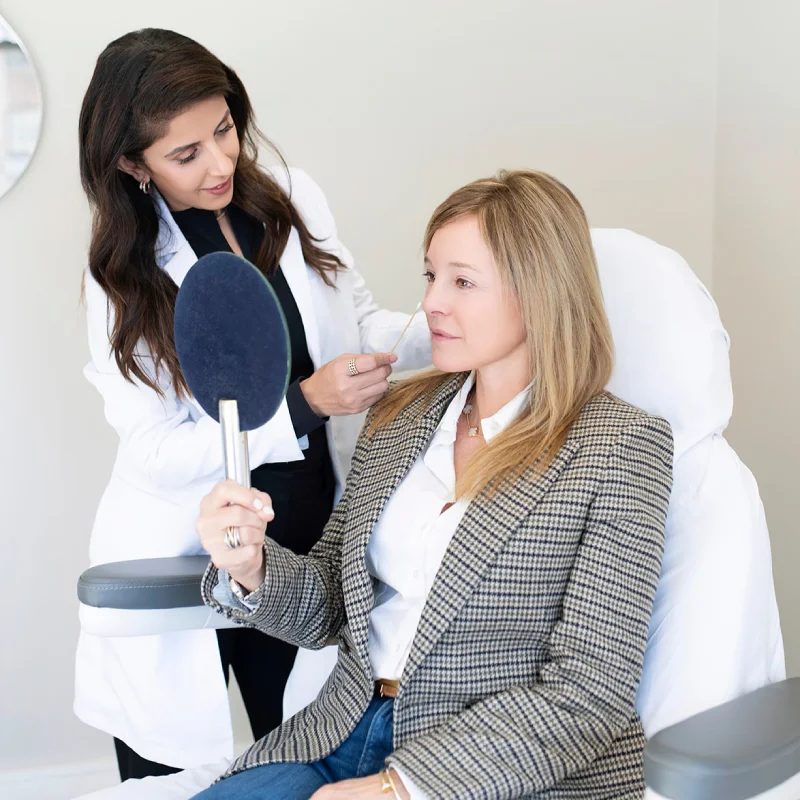
Expertise Clinical precision & harmony.
My Philosophy: Natural Expression Over Erasure
Frown lines sit between the eyebrows and can make you look stressed, tired, or even upset when you feel completely fine. However, one of the most common misconceptions is that frown lines should be completely eliminated. I disagree with that approach.
Over-treatment can lead to a “frozen” or mask-like appearance, loss of natural emotional expression, and an unnatural disconnect between the upper and lower face. When patients seek botox in upper west side area, they want clinical expertise.
As a physician, I focus on softening excessive muscle activity, preserving natural movement, and maintaining facial harmony using the lowest effective dose.
You should still be able to express concern, focus, and emotion—just without deep, persistent lines.
Anatomy of the Face
Understanding Frown Lines: What Causes Them?
Frown lines form primarily due to repeated contraction of key facial muscles when you frown, concentrate, squint, or experience stress.
Corrugator Supercilii
The primary muscle responsible for pulling the eyebrows inward.
Procerus Muscle
This muscle sits between the eyes and pulls the brows downward.
Depressor Supercilii
Works in tandem to contribute to overall brow depression and heavy expressions.
Collagen Breakdown
Over time, repeated contraction causes skin folding and permanent etched lines.
Initially, these lines appear only with movement. But eventually, they can remain visible even at rest (static wrinkles).
What Is Botox and How Does It Work for Frown Lines?
Botox is a neuromodulator that temporarily blocks nerve signals to targeted muscles. When I inject the glabellar region:
- The frown muscles safely relax.
- The pulling effect between the eyebrows decreases.
- Skin smooths out over time.
- The formation of deeper, permanent wrinkles is slowed.
The Importance of Full-Face Assessment
The glabellar muscles do not function in isolation. Treating frown lines without considering these relationships can lead to imbalance:
1. Forehead (Frontalis Muscle): This muscle lifts the eyebrows and counterbalances the downward pull of frown muscles.
2. Brow Position: Relaxing the glabellar muscles can create a subtle, natural brow lift when done correctly.
3. Crow’s Feet Area: These outer eye muscles influence how natural your overall expression appears after treatment.
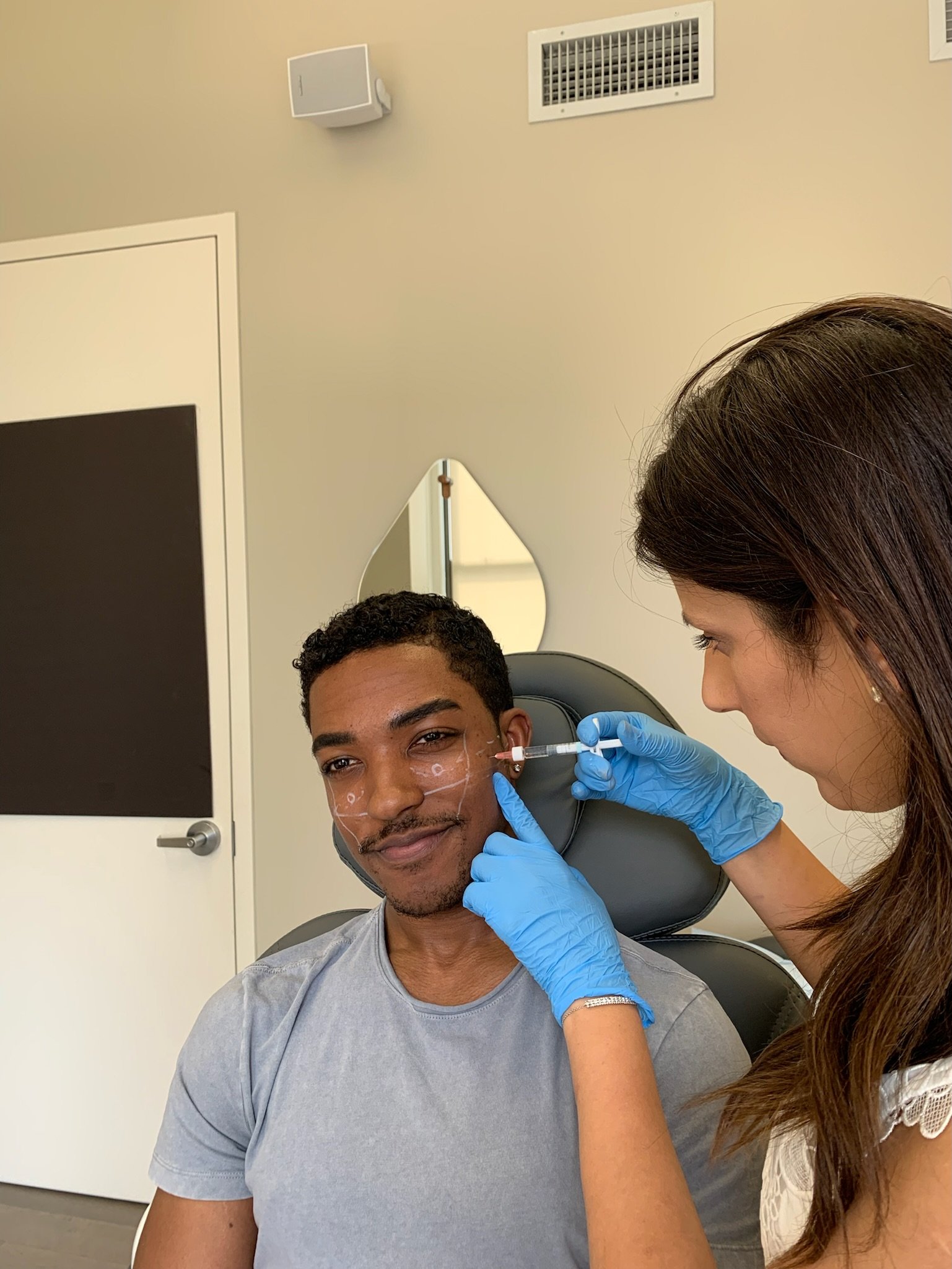
👉 That’s why I always evaluate the entire upper face, not just the frown lines, to ensure harmony and natural results.
A Tailored Experience
The Treatment Process: Step-by-Step
Detailed Evaluation
- • Muscle strength & patterns
- • Brow symmetry assessment
- • Skin quality check
- • Discussion of aesthetic goals
Customized Strategy
- • Map exact injection points
- • Determine optimal depth
- • Prescribe precise dosage tailored entirely to your anatomy
Precision Injection
Takes about 10–15 minutes.
- • Fine needles for minimal discomfort
- • Strategic placement
- • Conservative dosing to avoid overcorrection
Post-Treatment Care
- • Avoid rubbing the area for 24 hours
- • Stay upright for several hours
- • Resume normal activities the same day
When Will You See Results?
With repeated treatments, results often last longer as muscle activity becomes more controlled. Preventative Botox can also be highly effective here by relaxing strong muscles before permanent creasing occurs.
Expert Insight
Common Mistakes in Treating Frown Lines
1. Over-Treatment
Too much Botox can eliminate natural expression, leaving you looking frozen or disconnected.
My Approach: I prioritize subtle, controlled relaxation.
2. Poor Injection Placement
Incorrect placement can affect surrounding muscles and even cause temporary eyelid drooping.
My Approach: I use precise anatomical landmarks for pinpoint accuracy.
3. Ignoring Facial Balance
Treating the glabella without considering the forehead can create a heavy or imbalanced upper face.
My Approach: I evaluate the entire upper face as an interconnected system.
4. Treating Too Early or Unnecessarily
Not every patient needs Botox immediately. Preventative treatment should be strategic, not routine.
My Approach: I base treatment solely on muscle activity, not your age.
Botox vs. Other Treatments for Frown Lines
Botox is the gold standard for dynamic glabellar lines, but I often combine it with complementary treatments to address texture, volume, and deep static wrinkles:

Meet Your Aesthetic Physician
About Dr. Sonali Lal, M.D.
I am Dr. Sonali Lal, a board-certified physiatrist with over 20 years of experience in musculoskeletal and regenerative medicine. My approach to Botox is grounded in anatomy, precision, and individualized care.
As an Attending Physician at NewYork–Presbyterian Hospital and Assistant Clinical Professor at Columbia University, I bring a medical, evidence-based perspective to aesthetic treatments.
"I believe aesthetic medicine should enhance—not erase—your natural features."
Book a ConsultationLearn More
FAQs: Botox for Frown Lines
Will Botox make me look expressionless?
No. My approach preserves natural movement while softening harsh lines, so you never look "frozen."
Does treating frown lines lift the brows?
It can create a subtle, natural lift by reducing the downward pull of the glabellar muscles.
How many units are needed?
This varies depending on your specific muscle strength and anatomy. I always use the minimum effective dose.
How often should I get treated?
Typically every 3–4 months, though intervals may naturally extend over time as the muscles are trained to relax.
Can Botox completely remove deep frown lines?
It can significantly soften them. Very deep, static lines that are present at rest may require combination treatments like dermal fillers or microneedling for the best result.
A Smarter Way to Treat Frown Lines
Frown lines are one of the most treatable signs of aging—but also one of the most expressive areas of the face. The goal is not to eliminate emotion—it’s to remove the unwanted intensity that these lines can create.
The difference between a good result and a great one lies in precision, restraint, and an understanding of anatomy.
Book Your Consultation Today