 Skip to content
Botox for
Jawline Contouring
It’s not about changing who you are—it’s about refining proportions, softening excessive muscle bulk, and enhancing your natural definition with an anatomy-driven approach.
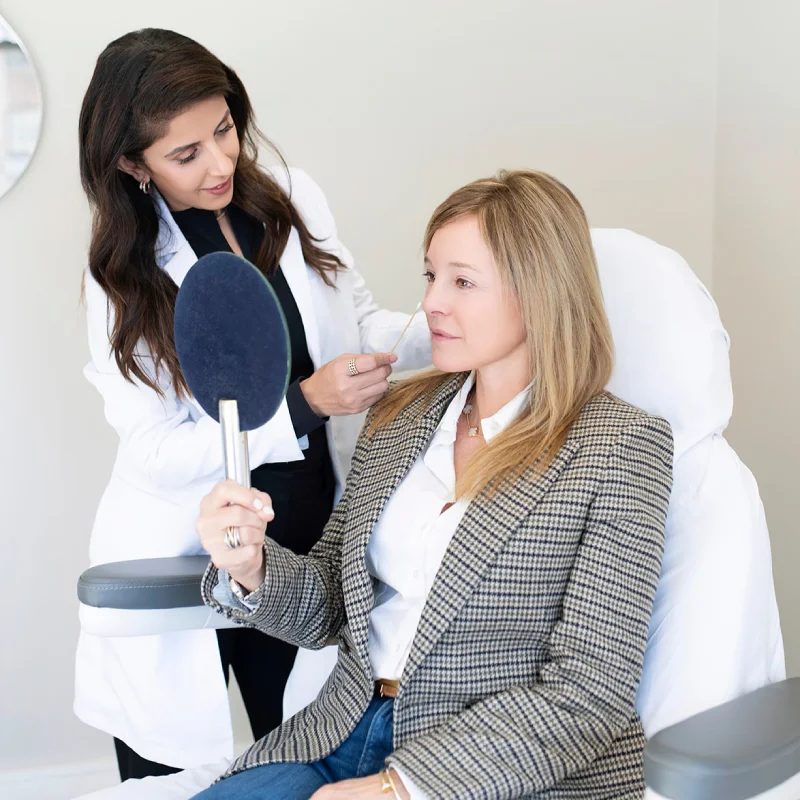
Expertise
Over 20 years of specialized medical experience.
Jawline contouring is one of the most requested aesthetic treatments—but also one of the most misunderstood.
Many patients assume it’s simply about “slimming the face,” when in reality, true jawline contouring requires a precise understanding of muscle function, facial balance, and structural support.
As a physician, I approach this treatment with the same anatomical precision I use in musculoskeletal care. The jaw is not just cosmetic—it is functional, dynamic, and deeply connected to how you chew, speak, and express yourself.
Anatomy Matters
Understanding the Jawline: Structure vs. Muscle
The shape of your jawline is influenced by two main factors.
1. Bone Structure (Mandible)
This determines the fundamental, underlying shape of your lower face. If your jawline shape is primarily due to bone structure or excess fat, Botox alone may be less effective.
2. Muscle Volume (Masseter)
The masseter is one of the strongest muscles in the body. When it becomes enlarged (hypertrophy), it creates a wider, square jaw, facial asymmetry, or a bulky lower face.
Enlargement often results from:
- • Teeth grinding (bruxism)
- • Jaw clenching (often stress-related)
- • Overuse of chewing muscles
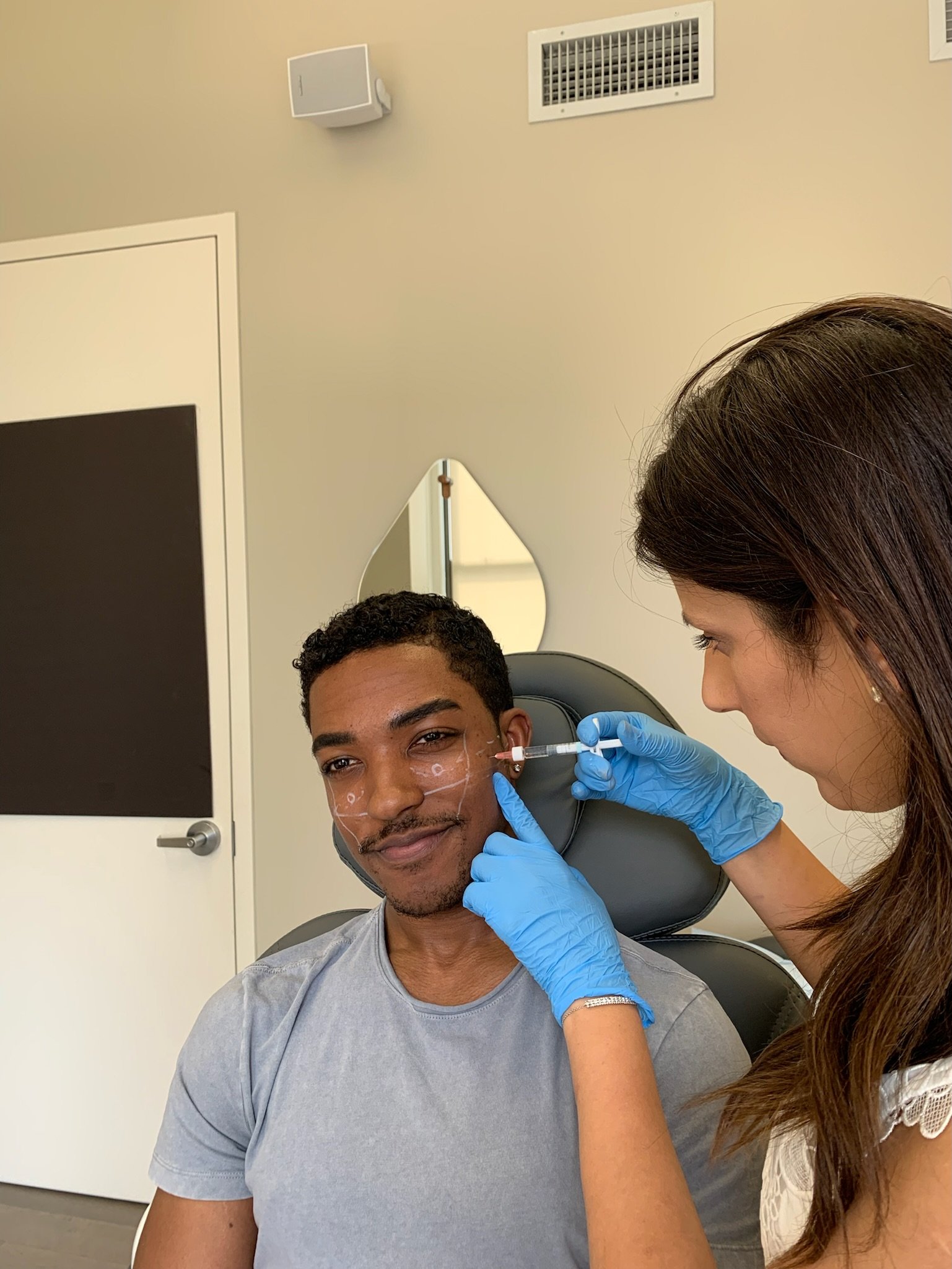
Function + Aesthetics
My approach focuses on reducing excessive muscle activity while preserving normal jaw function and facial harmony.
How Botox Works for Jawline Contouring
Unlike fillers, Botox does not add volume—it reduces excess muscle bulk. When injected into the masseter muscle:
- The muscle activity is reduced.
- Over time, the muscle gradually shrinks (atrophy).
- The jawline becomes slimmer and more contoured.
- Facial proportions become more balanced.
Who Is the Ideal Candidate?
It works best for patients who have a wide or square jaw due to muscle hypertrophy, a bulky lower face when clenching, teeth grinding, or facial asymmetry.
👉 Proper diagnosis is essential.
If your jawline shape is primarily due to bone or excess fat, other treatments may be required. I do not treat the jawline as an isolated cosmetic concern.
Your Journey
The Treatment Process: Step-by-Step
Comprehensive Assessment
- • Masseter size at rest and clenching
- • Facial symmetry
- • Jaw function & bite patterns
- • Presence of bruxism or TMJ
Customized Injection Plan
- • Exact injection points determined
- • Depth and technique tailored
- • Appropriate dosage based on your muscle strength
Precision Injection
Takes about 10–15 minutes.
- • Fine needles utilized
- • Targeted placement within muscle
- • Gradual dosing strategy
Aftercare
- • Avoid massaging area for 24 hours
- • Resume normal activities same day
- • Mild soreness may occur temporarily
When Will You See Results?
This delayed effect occurs because the muscle needs time to shrink. Results typically last 4–6 months, and longer with consistent treatments.
Additional Benefits Beyond Aesthetics
One of the unique aspects of this treatment is its dual benefit. Botox in the masseter can also help with:
- Teeth grinding (bruxism)
- Jaw clenching
- Tension headaches
- TMJ discomfort
Expert Insight
Common Mistakes in Jawline Botox
1. Over-Treatment
Too much Botox can weaken chewing power, cause jaw fatigue, or create an unnatural, hollow appearance.
My Solution: I use conservative dosing and adjust over time.
2. Poor Candidate Selection
Not all wide jawlines are muscle-related. Injecting Botox when the issue is bone or fat yields poor results.
My Solution: I assess whether the issue is muscle, bone, or fat first.
3. Incorrect Depth
The masseter is a thick muscle that requires highly precise injection technique to affect correctly.
My Solution: I use deep anatomical landmarks to ensure accuracy.
4. Ignoring Balance
Slimming the jaw without considering the cheeks or chin can create facial imbalance.
My Solution: I evaluate the entire face before designing a treatment.
Botox vs. Other Jawline Contouring Options
Botox is ideal for muscle-related jaw widening, but if your needs differ, I offer comprehensive solutions:

Meet Your Aesthetic Physician
About Dr. Sonali Lal, M.D.
I am Dr. Sonali Lal, a board-certified physiatrist with over 20 years of experience in musculoskeletal and regenerative medicine. My expertise in muscle function and anatomy allows me to approach Botox treatments with precision and care.
As an Attending Physician at NewYork–Presbyterian Hospital and Assistant Clinical Professor at Columbia University, I bring a medical, evidence-based approach to aesthetic procedures.
"I believe that aesthetic treatments should always respect function, structure, and individuality."
Book a ConsultationLearn More
FAQs: Jawline Contouring
Will my face look too slim?
Not with a conservative approach. I aim for gradual, natural refinement rather than drastic changes that unbalance the face.
Does the treatment hurt?
Most patients experience minimal discomfort, describing it as a quick pinch.
Can it help with teeth grinding?
Yes. It can significantly reduce muscle overactivity associated with bruxism and related tension headaches.
How many sessions are needed?
Some patients see results after one session, but optimal contouring may require repeat treatments depending on muscle mass.
Is the result permanent?
No, but repeated treatments over time can lead to longer-lasting muscle reduction (atrophy), spacing out required visits.
Redefining the Jawline—The Right Way
Jawline contouring with Botox is not about chasing trends—it’s about understanding anatomy and creating balance. A thoughtful, physician-led approach ensures results that are not only aesthetically pleasing—but also safe, functional, and sustainable over time.
Start Your Jawline Journey Today