 Skip to content
Botox for Crow’s Feet
Upper West Side
A physician-led approach. Treating crow’s feet is not about erasing your smile. It’s about refining it—softening lines while preserving the warmth, character, and authenticity of your expression.

Expression Look refreshed, not altered.
My Philosophy: Preserve the Smile, Soften the Lines
Crow’s feet—the fine lines that radiate from the outer corners of your eyes—are often one of the earliest and most expressive signs of aging. They appear when you smile, laugh, or squint, and over time, they can become etched into the skin even at rest.
When patients visit me on the Upper West Side, they seek a beautiful result that allows them to smile fully—just without the deep creasing. Over-injecting crow’s feet can flatten your smile, make your eyes look unnatural, or remove the “spark” from your expression.
As a physician, I focus on softening—not eliminating—lines, maintaining natural eye movement, and using minimal, precise dosing.
You should look refreshed, not altered.
Anatomy of the Eye
Understanding Crow’s Feet: Why They Form
Crow’s feet are caused primarily by the contraction of the orbicularis oculi muscle, which encircles the eye and is responsible for blinking, squinting, and smiling.
Repetitive Expressions
Dynamic wrinkles form from years of naturally smiling and squinting.
Loss of Collagen
Aging depletes collagen and elastin, preventing skin from bouncing back.
Thin Eye Skin
The skin around the eyes is exceptionally delicate, making lines more visible.
Sun & Lifestyle
Photoaging (sun damage) and genetics accelerate the etching of static wrinkles.
Initially, these lines appear only when you smile (dynamic wrinkles). Over time, they become visible even when your face is at rest (static wrinkles).
What Is Botox and How Does It Work Here?
Botox is a neuromodulator that temporarily relaxes targeted muscles. When I treat crow’s feet:
- The outer portion of the orbicularis oculi muscle is relaxed.
- Skin folding is significantly reduced.
- Fine lines soften gracefully.
- Future wrinkle formation slows down.
Why Crow’s Feet Require Extreme Subtlety
The eye area is one of the most delicate regions of the face. My approach requires precise consideration of:
1. Smile Dynamics: Over-treatment can make your smile look artificial. Your eyes are central to perception.
2. Cheek Support: Treating without considering mid-face dynamics can create imbalance.
3. Lower Eyelid Function: The muscle supports eyelid function. Excessive relaxation affects comfort.
4. Brow Position: Proper treatment can subtly enhance brow shape due to the lateral brow interplay.
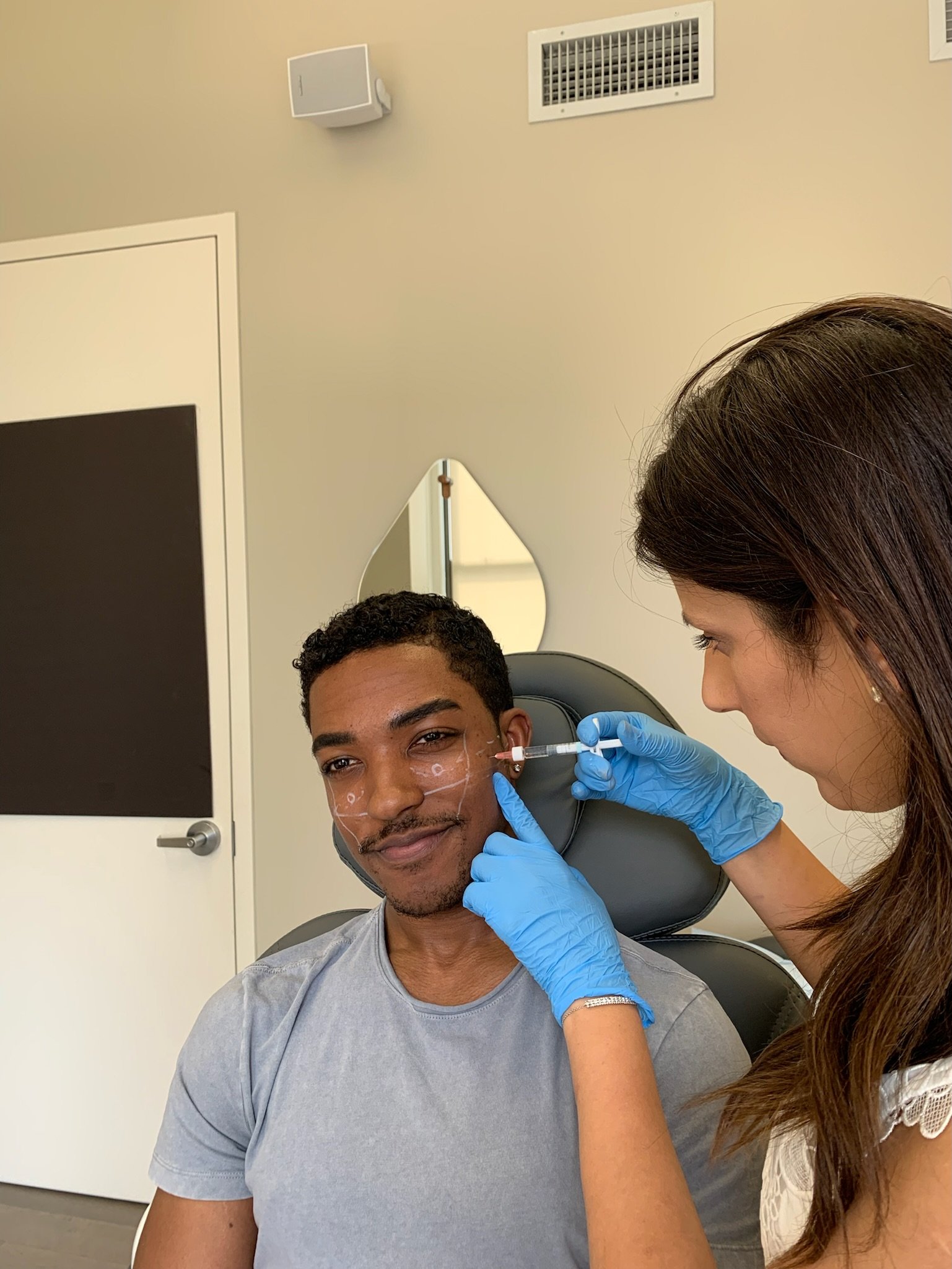
👉 This is why I always evaluate the entire upper face and mid-face, not just the lines, when providing botox in upper west side area.
A Tailored Experience
The Treatment Process: Step-by-Step
Facial Assessment
- • Muscle movement during smiling & squinting
- • Skin quality evaluation
- • Facial symmetry check
- • Discussion of your aesthetic goals
Customized Plan
- • Determine exact injection points
- • Calculate perfect depth
- • Prescribe precise dosage based on your unique anatomy
Precision Injection
Takes about 10–15 minutes.
- • Fine needles used for ultimate comfort
- • Strategic, minimal placement
- • Conservative dosing for natural aesthetics
Aftercare
- • Avoid rubbing the eye area for 24 hrs
- • Stay upright for a few hours
- • Resume normal activities the same day
When Will You See Results?
With consistent treatments, your eye muscles learn to relax, and results may last longer over time. Preventative Botox can also be highly beneficial depending on your muscle activity.
Expert Insight
Common Mistakes in Crow’s Feet Treatment
1. Over-Treatment
Too much Botox can completely flatten your smile and create a frozen, unnatural appearance.
My Approach: I use minimal dosing to preserve your genuine expression.
2. Poor Injection Placement
Incorrect placement around the delicate eye region can negatively affect surrounding muscles and eyelid function.
My Approach: I rely on deep, precise anatomical knowledge for every injection.
3. Ignoring Facial Balance
Treating crow’s feet alone without looking at the cheeks or brows may not produce cohesive, natural results.
My Approach: I assess the full face—including cheeks and brows—for harmony.
4. Chasing Every Line
Trying to eliminate 100% of the lines around the eyes often leads to poor, "waxy" outcomes.
My Approach: I prioritize natural aesthetics and elegance over rigid perfection.
Botox vs. Other Treatments for Eye Rejuvenation
Botox is highly effective for dynamic wrinkles, but for comprehensive rejuvenation, I often combine it with complementary treatments to address texture, volume, and collagen loss:

Meet Your Aesthetic Physician
About Dr. Sonali Lal, M.D.
I am Dr. Sonali Lal, a board-certified physiatrist with over 20 years of experience in musculoskeletal and regenerative medicine. My approach to Botox is rooted in anatomy, precision, and individualized care.
As an Attending Physician at NewYork–Presbyterian Hospital and Assistant Clinical Professor at Columbia University, I bring a medical, evidence-based perspective to aesthetic treatments.
"I believe aesthetic medicine should enhance your natural features—not erase them."
Book a ConsultationLearn More
FAQs: Botox for Crow’s Feet
Will Botox change my smile?
Not when done correctly. My primary goal is to preserve your natural smile while softening the harsh lines.
How many units are needed?
This varies based on your muscle strength and desired results. I always use the minimum effective dose to prevent a frozen look.
Can Botox completely remove crow’s feet?
It can significantly soften them, especially dynamic lines. Extremely deep, static lines may require combination treatments like lasers or microneedling.
How often should I get treated?
Typically every 3–4 months, though some patients find they can extend the time between visits longer over time as the muscle trains to relax.
Is the eye area safe to treat?
Yes, Botox has a strong safety profile and FDA approval for cosmetic indications around the eyes, especially when performed by an experienced physician with proper anatomical technique.
Refining, Not Erasing
Crow’s feet are part of what makes your smile genuine and expressive. The goal of Botox is not to remove that character—it’s to refine it. When done correctly, Botox can soften fine lines around the eyes, preserve natural expression, enhance your smile, and prevent deeper wrinkles over time.
The difference between artificial and elegant results comes down to the hands of the physician.
Schedule Your Eye Rejuvenation