
Botox for Forehead Lines
Upper West Side
Forehead lines are often the first place patients notice visible aging. Treating them correctly is not as simple as “relaxing a wrinkle.” It requires a precise understanding of facial anatomy and muscle balance to ensure natural, harmonious results.
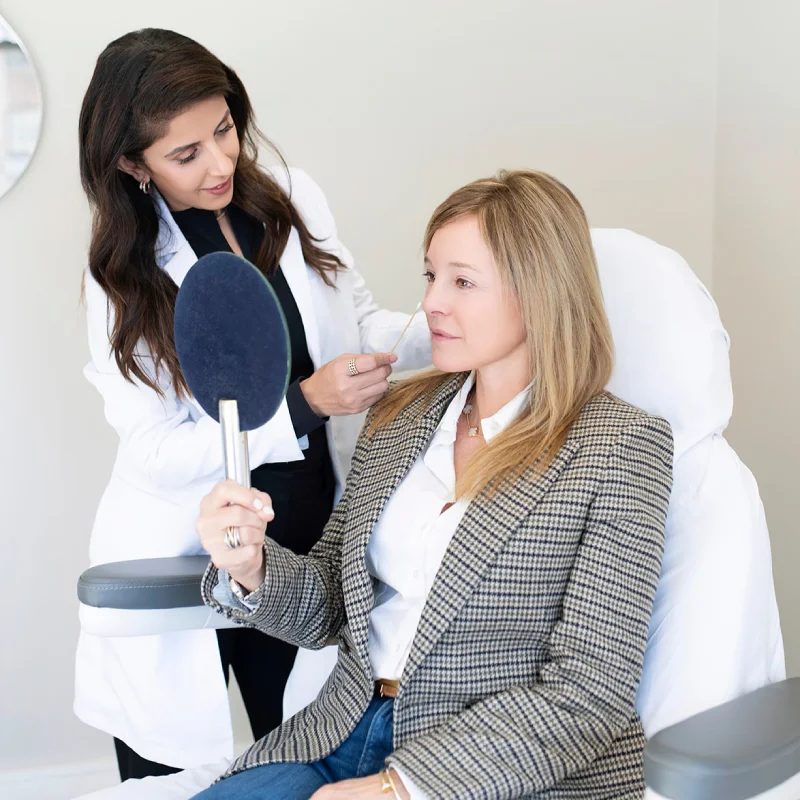
Erasure Smooth lines. Keep expression.
My Philosophy: Balance Over Erasure
Forehead lines can make you appear tired, stressed, or older than you feel—even when you’re well-rested. As a physician serving the Upper West Side, I approach forehead Botox with the same level of care and diagnostic thinking that I apply to musculoskeletal treatments.
I strongly disagree with the common approach of aggressively injecting the entire forehead to eliminate every single line. That leads to a “frozen” look, loss of personality, and unnatural facial imbalance.
My goal is not to freeze your forehead. I focus on selective muscle relaxation, preserving brow position, and using the lowest effective dose.
Forehead Botox is about softening while keeping you expressive and natural.
Anatomy of the Upper Face
Understanding Forehead Lines: Why They Form
Forehead lines—also called horizontal forehead wrinkles—develop primarily due to repeated contraction of the frontalis muscle, the muscle responsible for lifting your eyebrows.
Repetitive Expressions
Raising eyebrows, surprise, and emphasis while speaking crease the skin over time.
Collagen Loss
Aging depletes collagen and elastin, so the skin doesn't bounce back as quickly.
Photoaging
Sun exposure, skin thinning, and dehydration accelerate the etching of lines.
Compensatory Activity
Many overuse the frontalis muscle simply to lift heavy eyelids to see clearly.
What many patients don’t realize: Forehead lines are often compensatory. Your body may be overusing the forehead muscle to lift heavy eyelids or balance other facial muscles. Treating them correctly requires much more than just injecting where the lines are.
How Botox Works for Forehead Lines
Botox is a neuromodulator that temporarily reduces muscle activity. When injected into the forehead:
- The frontalis muscle relaxes.
- Skin folding decreases significantly.
- Lines soften or disappear.
- Future wrinkle formation slows down.
Why Full-Face Assessment is Critical
The forehead is the only muscle that lifts your eyebrows. If treated incorrectly, it can lead to heavy brows, a tired appearance, or loss of expression. Before treating, I evaluate:
1. Glabellar Complex (Frown Muscles) These pull the brows downward. If untreated, they can counteract forehead Botox and create imbalance.
2. Brow Position & Eyelid Weight Every patient has a unique brow shape. Some subconsciously raise their eyebrows to compensate for heavy eyelids. Over-relaxing drops the brows.
3. Crow’s Feet Lateral eye lines contribute to overall upper-face dynamics.
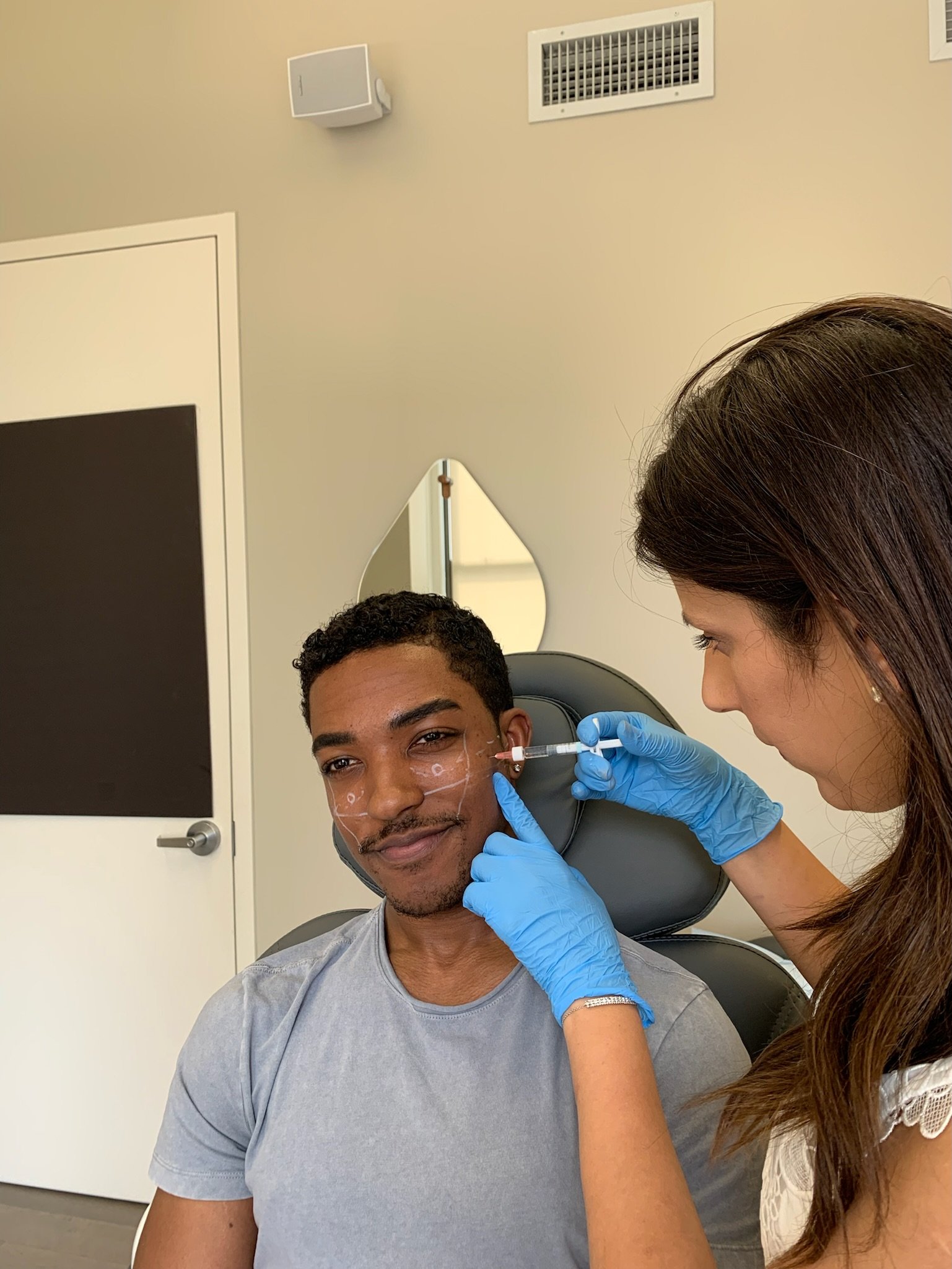
👉 This is why I often combine forehead treatment with glabellar Botox for optimal balance. The forehead does not function in isolation.
A Diagnostic Approach
The Treatment Process: Step-by-Step
Detailed Facial Analysis
This is a diagnostic process, not a quick consult.
- • Muscle strength & movement
- • Symmetry assessment
- • Skin quality evaluation
- • Brow dynamic analysis
Customized Plan
- • Determine exact injection points
- • Map proper depth
- • Prescribe precise dosage based on your unique anatomy, not a template.
Precision Injection
Takes about 10–15 minutes.
- • Ultra-fine needles utilized
- • Strategic, safe placement
- • Minimal product to ensure comfort and natural aesthetics
Aftercare Guidance
- • Avoid massaging the area for 24 hrs
- • Stay upright for a few hours
- • Resume most normal activities immediately
When Will You See Results?
With consistent treatments, results may last longer as muscle activity becomes more controlled.
Expert Insight
Common Mistakes in Forehead Botox
1. Over-Treatment
Too much Botox leads to heavy brows, a flat expressionless forehead, and a highly unnatural appearance.
How I Avoid It: I use conservative dosing and build gradually.
2. Ignoring Brow Dynamics
Treating the forehead without addressing the downward-pulling muscles (glabella) can easily create imbalance.
How I Avoid It: I evaluate and often treat the glabellar area simultaneously.
3. Uniform Injection Patterns
Not all foreheads are the same. A standard template injection will not work for everyone's anatomy.
How I Avoid It: I customize every single injection pattern based on your muscle activity.
4. Treating Too Low on the Forehead
Injecting too close to the brow increases the risk of severe brow drooping and a hooded eye appearance.
How I Avoid It: I carefully select safe injection zones to preserve your natural lift.
Is Preventative Botox Necessary?
Preventative Botox is often over-marketed. I do not recommend starting based on age alone. The decision should be anatomy-driven, not trend-driven. We look at whether lines are persisting at rest, if muscle activity is accelerating creasing, and if there are early structural changes.
Botox vs. Other Treatments for Forehead Lines
Botox is the gold standard for dynamic forehead lines, but I often combine it with treatments targeting texture, collagen, and skin quality:

Meet Your Aesthetic Physician
About Dr. Sonali Lal, M.D.
I am Dr. Sonali Lal, a board-certified physiatrist with over 20 years of experience in musculoskeletal and regenerative medicine. My approach to Botox is grounded in anatomy, precision, and individualized care.
As an Attending Physician at NewYork–Presbyterian Hospital and Assistant Clinical Professor at Columbia University, I bring a medical, evidence-based perspective to aesthetic treatments.
"I believe Botox should enhance—not erase—your natural features."
Book a ConsultationLearn More
FAQs: Botox for Forehead Lines
Will my eyebrows drop after Botox?
Not when done correctly. I carefully preserve the lifting function of the forehead muscle while softening excessive movement.
Will I still be able to express emotions?
Yes. My goal is natural movement—not a frozen appearance. You will still look like yourself, just more refreshed.
How many units of Botox do I need?
This varies widely depending on muscle strength, forehead size, and desired result. I always use the minimum effective dose.
How often should I repeat treatment?
Typically every 3–4 months, though some patients find they can extend the time between visits longer over time.
Can Botox completely remove forehead lines?
It can significantly soften them. Deep, static lines that are etched into the skin may require combination treatments like microneedling or skincare for optimal results.
A Smarter Way to Treat Forehead Lines
Forehead Botox is one of the most effective treatments for early aging—but also one of the easiest to get wrong. The difference lies in understanding muscle dynamics, respecting facial balance, and using conservative, precise techniques.
When done thoughtfully, it becomes not just a cosmetic treatment—but a long-term strategy for healthy, graceful aging.
Book Your Consultation Today