
Botox for TMJ
Upper West Side
Find relief from chronic jaw tension, teeth grinding, and headaches. When carefully administered, Botox can relax overactive jaw muscles, improving function and comfort while preserving natural facial expression.
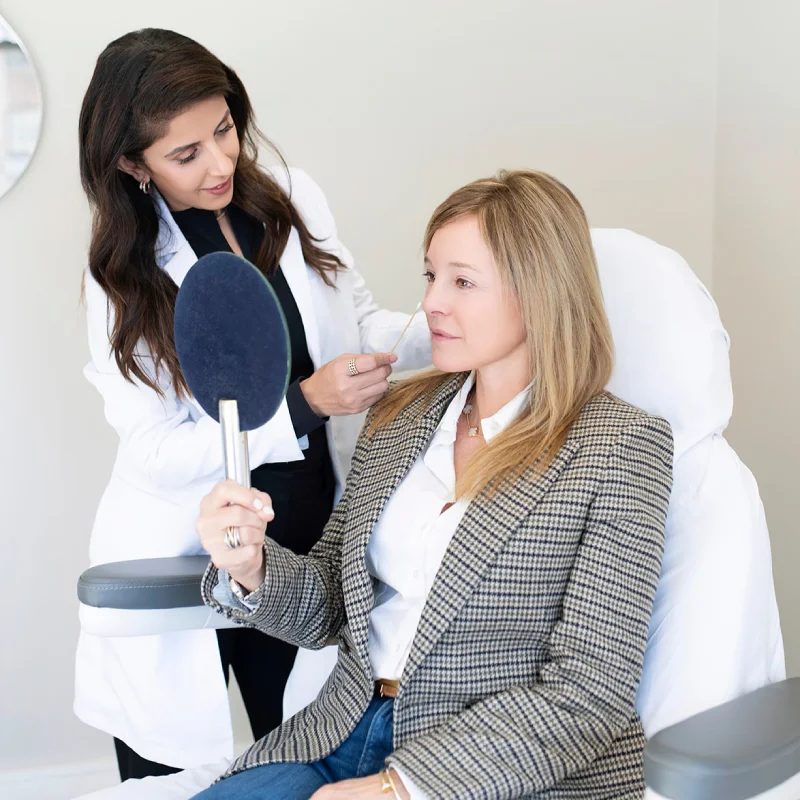
Relief Restore function & comfort.
My Philosophy: A Functional & Anatomical Approach
Temporomandibular joint (TMJ) dysfunction can affect nearly every part of daily life. Simple activities such as chewing, speaking, yawning, smiling, or even waking up in the morning may become uncomfortable or painful. Many patients come to my Upper West Side clinic after months or years of jaw tension that never truly resolves with mouthguards alone.
As a board-certified physiatrist with over 20 years of experience in musculoskeletal medicine, I evaluate not only the jaw itself, but also the surrounding muscles, posture, cervical spine mechanics, and facial symmetry.
Unlike cosmetic treatments that focus purely on wrinkles, Botox for TMJ is used therapeutically.
My goal is to target excessive muscle activity to reduce clenching and pain while preserving your natural facial balance.
Understanding the Condition
What Is TMJ Disorder?
The temporomandibular joints connect your lower jaw to your skull. TMJ disorder occurs when the joint or surrounding muscles become overworked, inflamed, or dysfunctional.
Teeth Grinding (Bruxism)
Chronic grinding, especially at night, places immense strain on the jaw joints and teeth.
Jaw Clenching
Often stress-related, persistent clenching overworks the masseter and temporalis muscles.
Headaches & Migraines
Muscular tension from the jaw frequently refers pain upward, causing severe tension headaches.
Facial Muscle Fatigue
Difficulty opening the mouth, pain while chewing, and general morning jaw stiffness.
What many patients don't realize: TMJ symptoms are often muscular rather than purely joint-related. Chronic overuse of the masseter and temporalis muscles creates significant pressure throughout the face and neck. This is where Botox provides meaningful relief.
How Botox Helps TMJ Symptoms
Botox works by temporarily relaxing targeted muscles that are overactive or excessively tight. For TMJ treatment, I commonly focus on muscles involved in clenching and grinding, particularly the masseter muscles located at the sides of the jaw.
- Reduces excessive muscular contraction.
- Decreases the heavy force placed on the jaw joint.
- Improves comfort while chewing and speaking.
- Alleviates tension headaches and morning jaw tightness.
- Enhances overall sleep quality by minimizing nighttime grinding.
Can Botox Slim the Jawline?
Patients with chronic clenching often develop enlarged masseter muscles (hypertrophy), creating a wider or square-shaped jaw. When Botox relaxes these muscles, the muscle bulk may gradually decrease over time, offering a secondary cosmetic benefit of a softer facial contour. However, my priority is always functional improvement first.
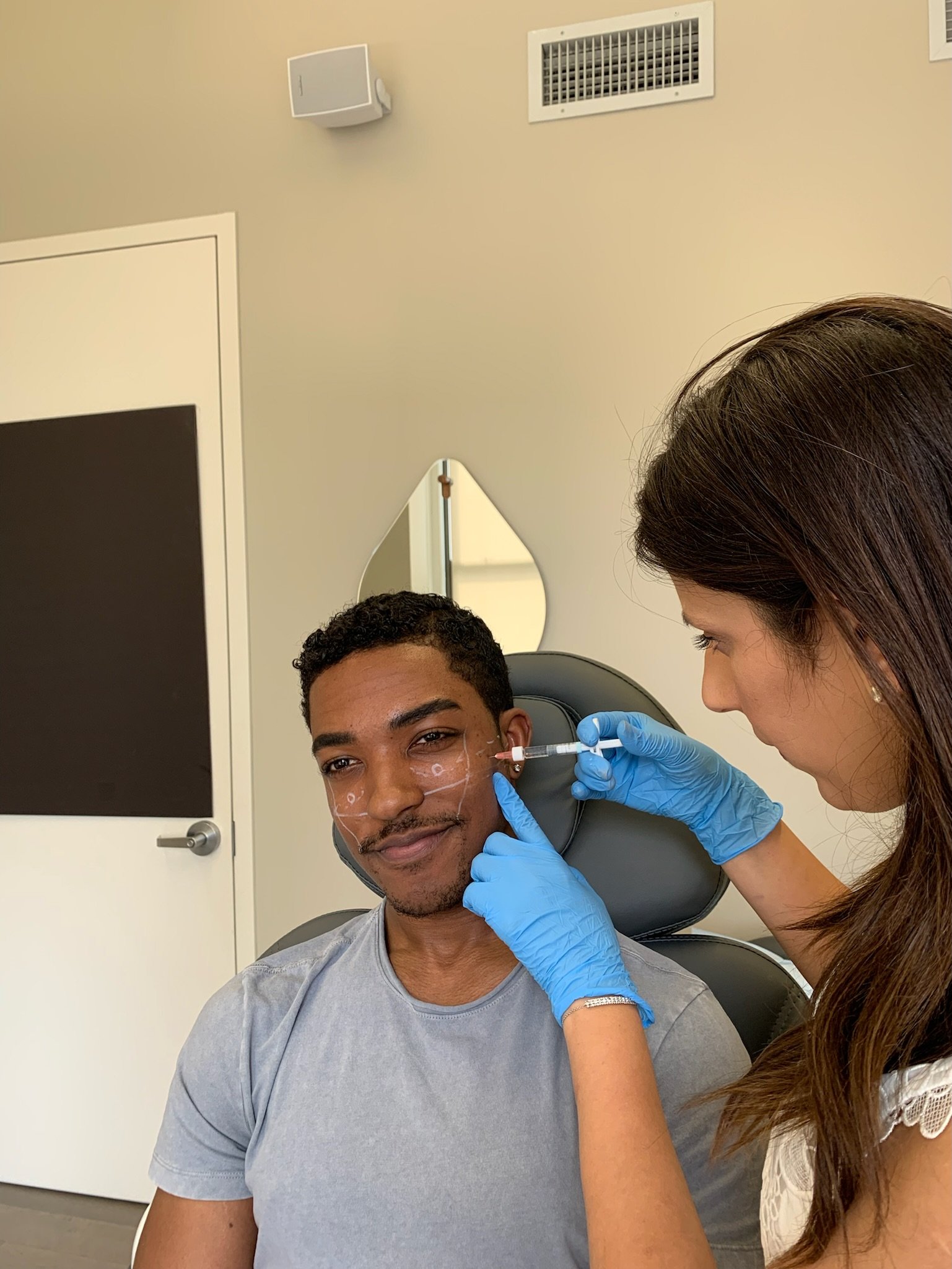
Because of my background in musculoskeletal medicine, I also evaluate whether neck dysfunction, posture abnormalities, or stress-related muscle activation are contributing to your pain.
A Tailored Medical Approach
What Happens During Treatment?
Consultation & Evaluation
A thorough discussion of your symptoms.
- • Assess medical history & prior treatments
- • Examine jaw muscles while clenching
- • Evaluate neck and upper cervical tension
- • Identify trigger points
Customized Planning
- • Determine exact injection sites
- • Tailor dosage to muscle strength
- • Account for facial anatomy to avoid altering proportions unnaturally
Botox Injections
Takes about 15–30 minutes.
- • Targeted injections into masseter and/or temporalis muscles
- • Fine needles used for minimal discomfort
- • Highly tolerated by most patients
Recovery & Follow-Up
- • Little to no downtime
- • Return to normal activities immediately
- • Minor tenderness or swelling is rare and short-lived
When Will You See Results?
Patients who grind heavily or have strong jaw musculature may require maintenance treatments to sustain results over time.
Safety & Precision
Why Experience Matters for TMJ Botox
The jaw contains complex muscular and functional relationships. Treating TMJ is not simply about injecting product into the jaw—it requires a deep understanding of facial anatomy, bite mechanics, and neuromuscular function.
1. Avoiding Over-Treatment
Aggressive dosing can create excessive weakness, temporary chewing fatigue, or alter your facial proportions unnaturally.
My Approach: I use conservative, individualized planning to preserve natural function and appearance.
2. Proper Placement
Improperly placed injections can lead to mild asymmetry or affect surrounding muscles unintended for relaxation.
My Approach: I rely on advanced anatomical knowledge honed through years of musculoskeletal medicine.
3. Looking Beyond the Jaw
Treating just the jaw muscles without considering posture or cervical spine mechanics may only offer partial relief.
My Approach: I take a comprehensive look at your overall musculoskeletal health.
Potential Side Effects
Botox is generally well tolerated. Possible minor side effects include mild bruising, temporary tenderness, minor swelling, or temporary chewing fatigue. This is why detailed anatomical understanding and careful technique are essential.
Comprehensive TMJ Care & Aesthetics
While cosmetic Botox targets wrinkles, TMJ Botox focuses on muscular balance and symptom relief. For comprehensive care, I often combine treatments based on your needs:

Why Choose My Practice?
About Dr. Sonali Lal, M.D.
I am Dr. Sonali Lal, a board-certified physiatrist with over 20 years of experience specializing in musculoskeletal and sports medicine. My patient-centered philosophy emphasizes listening carefully, evaluating thoroughly, and creating tailored treatment plans.
As an Attending Physician at NewYork–Presbyterian Hospital and Assistant Clinical Professor at Columbia University, I focus on non-surgical approaches that restore function and reduce pain. Located in the Upper West Side at 240 West 73rd Street, my clinic offers a professional environment for patients experiencing facial tension and TMJ dysfunction.
Book Your TMJ ConsultationLearn More
FAQs: Botox for TMJ
Is Botox for TMJ different from cosmetic Botox?
Yes. Although the same medication is used, therapeutic Botox for TMJ focuses on reducing excessive muscular contraction within the jaw muscles to relieve pain and improve function, rather than targeting facial wrinkles.
Who is a good candidate for TMJ Botox?
It is appropriate for patients experiencing chronic jaw tension, teeth grinding (bruxism), jaw clenching, muscular TMJ pain, or tension headaches related to jaw tightness.
How long do the results last?
Results typically last approximately 3 to 4 months. Patients who grind heavily may require maintenance treatments, though results can sometimes last longer with repeated visits.
Will the treatment slim my jawline?
If you have enlarged masseter muscles due to chronic clenching or grinding, relaxing these muscles with Botox may gradually decrease their bulk, offering a secondary benefit of a softer facial contour.
Comprehensive TMJ Care in the Upper West Side
Many patients spend years trying temporary solutions that never fully address the underlying muscular tension contributing to their discomfort. At my Upper West Side practice, I focus on comprehensive, patient-centered care to help you find true relief.
A proper evaluation is the first step toward understanding what is contributing to your TMJ symptoms.
Book Your TMJ Consultation